 OPTIMUS DISTRIBUTOR
- The valve is on a terminal unit: fan coil, chilled beam, radiator or small AHU
- The same valve is repeated dozens or hundreds of times across the package
- Nobody will read per-terminal energy data once the building is handed over
- There is no power at the valve position, and pulling it is a real cost
- The maintenance team is a building team, not an instrumentation team
- Closed-loop water quality is ordinary rather than pharmaceutical
Comparison · Hydronic control
Mechanical PICV vs electronic PICV
Rule of thumb Mechanical on terminal unitsA mechanical PICV holds design flow with a spring-and-diaphragm cartridge and needs no power. An electronic PICV measures and modulates flow with sensors, actuators and electronics. For terminal units, Optimus Distributor's published position favours mechanical PICV: E-PICV inflates valve budgets, adds wiring failure points, drifts in dirty closed-loop water and needs electronics-literate maintenance. Only an energy-metering requirement justifies that cost.
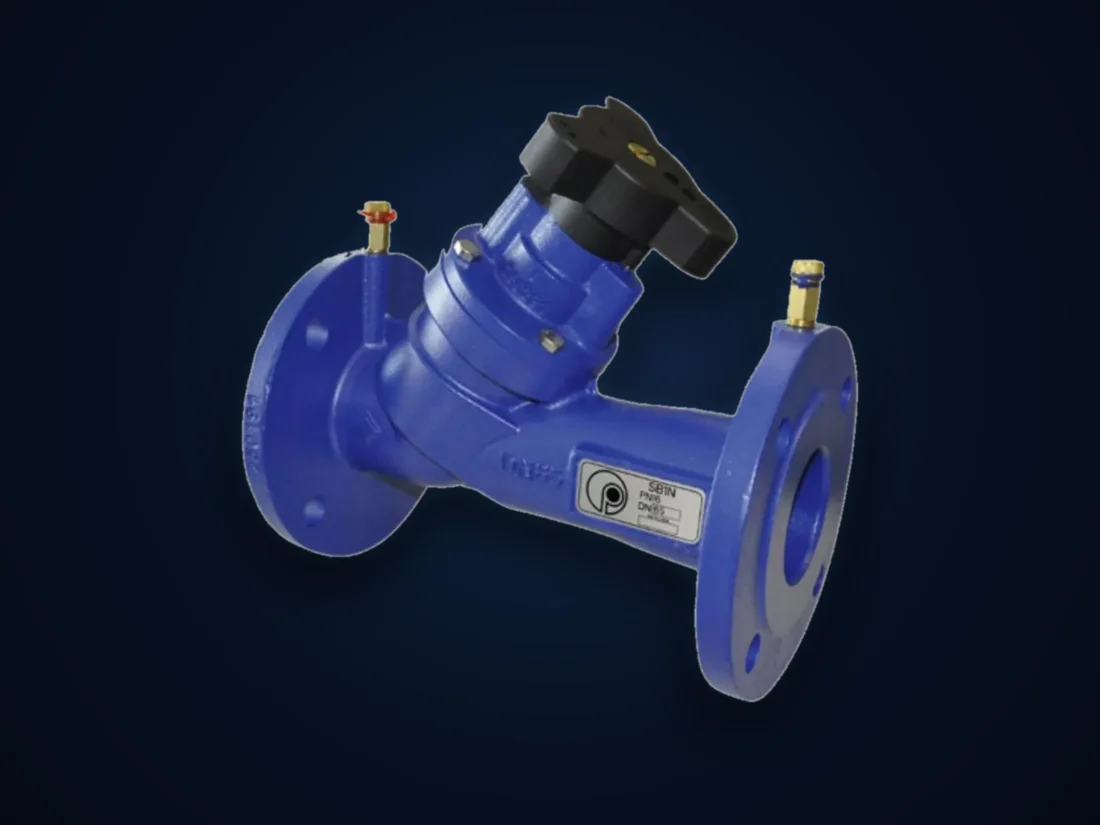
Option A
Mechanical PICV
vs
A spring and diaphragm regulate the differential across an adjustable orifice, so preset flow holds. No power, no signal, no sensor.
Option B
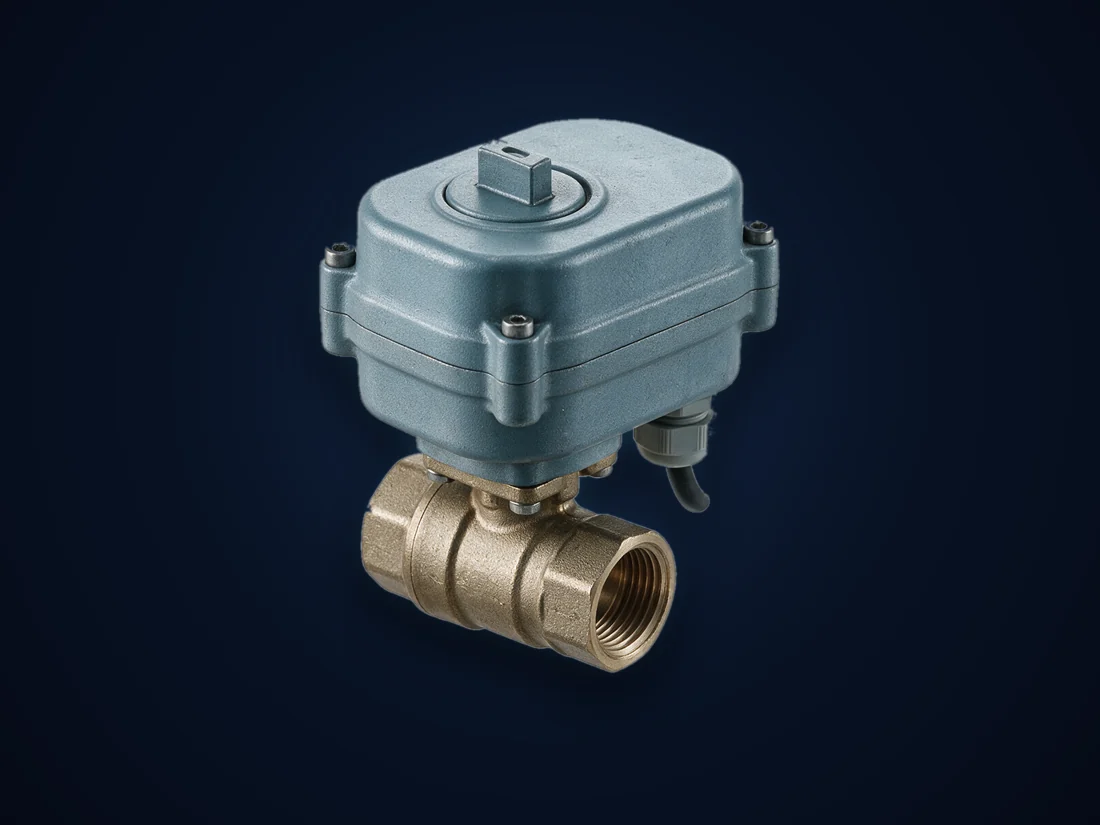
Electronic PICV
A flow or energy sensor and a smart actuator compute control in software and report it to the BMS. Needs a supply, a cable and a commissioning tool.
One job, two very different machines
Both valves solve the same problem. In a real chilled-water system the differential pressure across any fan coil is never the number the designer assumed: it moves as other terminals modulate, as pumps ride their curve, and as the building loads and unloads. A conventional two-port control valve passes more or less water than its schedule says, which is how a tower ends up with cold lower floors and complaints on level 22. A pressure independent control valve delivers the flow it was set to deliver, whatever the differential is doing. New to the principle? Start with what a pressure independent control valve actually does.
The disagreement is not about the principle. It is about the machinery you install to achieve it, on every terminal, for the next twenty years.
Cartridge versus sensor loop
A mechanical PICV stacks three functions into one body: a differential pressure regulator, an adjustable presetting orifice, and a control valve driven by the room thermostat or the BMS output. The regulator is a spring working against a rolling diaphragm. When the differential rises, the diaphragm holds the pressure drop across the presetting orifice constant, so flow stays constant too. Nothing is measured and nothing is computed. The Pettinaroli ranges we supply, EvoPICV 91 and the Dynasty 92 Series, work exactly this way, and are set at the valve with a scale you can read on site.
An electronic PICV replaces the diaphragm with instrumentation. A flow sensor or a full energy meter watches what the terminal is receiving. A smart actuator drives the plug to the position the software calculates, and the loop reports back to the building management system. It is a capable device. It is also a small computer in a wet plantroom, drawing power, on a cable someone has to pull, terminate and fault-find.
03 · Criterion by criterion
Ten criteria, decided one at a time
| Criterion | Mechanical PICV | Electronic PICV |
|---|---|---|
| Power supply | None. The valve works on system pressure alone | A supply and a cable to every valve, plus containment and terminations |
| How flow is held | Spring-and-diaphragm regulator across a preset orifice | Sensor measures flow, software computes the correction, actuator moves |
| Capital cost per terminal | The baseline against which the alternative is judged | 2× to 4× the valve budget, before wiring and commissioning |
| Failure points | One moving assembly in one body | Supply, cable, terminations, sensor, actuator electronics, firmware |
| Dirty closed-loop water | Nothing to foul; strainers protect the cartridge | Sensor drift as magnetite and debris accumulate on the sensing element |
| Commissioning | Preset by hand at the valve, readable on the scale | Configured through a tool or the BMS; needs the network live to prove |
| Maintenance skill | Ordinary building maintenance skills | Electronics-literate maintenance for the life of the building |
| Live flow & energy data | None. What you set is what you get, unreported | Continuous flow, temperature and energy readout to the BMS |
| Remote re-ranging | Manual: someone visits the valve and turns the setting | Re-ranged from the BMS without touching the ceiling void |
| Best fit | Terminal units in quantity: fan coils, chilled beams, radiator circuits | Large, individually metered plant items where the analytics are the deliverable |
The 2× to 4× multiple and the failure-mode list are Optimus Distributor's published engineering position, drawn from what we see in Malaysian buildings. The mechanism descriptions are general hydronic practice. Confirm ranges, Kvs values and presetting scales against the current manufacturer datasheet and your purchase order.
What the premium actually buys, and what it costs
The multiple decides most projects. An electronic PICV inflates the valve budget by two to four times, and on a terminal-unit package that is paid per valve, several hundred times over in a mid-rise office tower. The line item that follows is rarely priced at tender: power to every valve, containment, terminations, a commissioning tool, and an addressable BMS point for each one. By then the delta is not a valve premium. It is a small electrical subcontract.
The running cost is quieter and lasts longer. Closed-loop water in a Malaysian building is not laboratory clean. It carries magnetite, jointing compound, pipe scale and whatever the flushing regime missed. A diaphragm does not care. A sensing element does: it drifts, and a drifting sensor is worse than no sensor, because the BMS keeps reporting a number that is no longer true. A fault then needs someone who can read a wiring diagram rather than someone who can turn a setting.
- Valve budget inflated 2× to 4× per terminal, multiplied across the whole package
- Power, wiring and terminations added to a valve that previously needed none
- Sensor drift in dirty closed-loop water, reported to the BMS as fact
- Electronics-literate maintenance required for the life of the installation
Where an electronic PICV genuinely earns its place
There are duties where the electronic valve is the right answer, and we will say so on the call. If the requirement is energy metering, per-tenant billing, a green-building submission that has to be evidenced, or plant-level analytics someone will actually read, then live flow, return temperature and energy at the valve is the deliverable. Buying a separate meter and a mechanical PICV often costs more than one electronic valve doing both jobs. The same applies to a handful of large air handling units where each valve is individually significant and the wiring is trivial.
What does not survive scrutiny is applying that argument to three hundred fan coils. The analytics from a single terminal unit are almost never read, the cost is multiplied by three hundred, and the failure surface grows by the same factor. Metering belongs where the meter is worth having: usually the branch, the floor or the plant item, not the ceiling void. The whole-system view is set out in our pillar guide to hydronic balancing and PICV for commercial buildings.

06 · The decision
Choose mechanical PICV when
Choose electronic PICV when
Choose mechanical when · choose electronic when
- Energy metering at the valve is a stated requirement, not a nice-to-have
- Per-tenant billing or a green-building submission has to be evidenced
- The valve count is small and each unit is individually significant
- Re-ranging from the BMS replaces site visits that would otherwise happen
- Power and network already reach the valve position by design
- Someone is contractually responsible for reading the analytics
The recommendation we actually give
We are a distributor, not a manufacturer of either type. We have no reason to talk anyone out of the more expensive valve, and we do it anyway: the arithmetic on terminal units is not close.
Our verdict
For terminal units, specify a mechanical PICV. It holds design flow with no power, no cable and no sensor to drift. It is preset by hand and readable on site, and costs a fraction of the electronic alternative across hundreds of terminals.
Specify an electronic PICV where energy metering or BMS analytics is a real, named requirement on a small number of significant valves. Price the wiring, the commissioning and the twenty years of electronics-literate maintenance into that decision honestly.
If a project has already been designed around electronic valves, that is not a reason to reopen it. It is worth checking that the metering requirement driving the spec exists in the client's brief, and not just in a manufacturer's presentation. Send us the flow schedule and the terminal list and we will size both options against it. The valves come from the Pettinaroli line we supply, sized per terminal and preset before dispatch.
PICV · Sized per terminal
Send the flow schedule. We will size both.
Design flow, differential range and terminal count is enough to start. Price, lead time and stock on the first reply, and an engineer who will tell you when the cheaper valve is the better one.