 OPTIMUS DISTRIBUTOR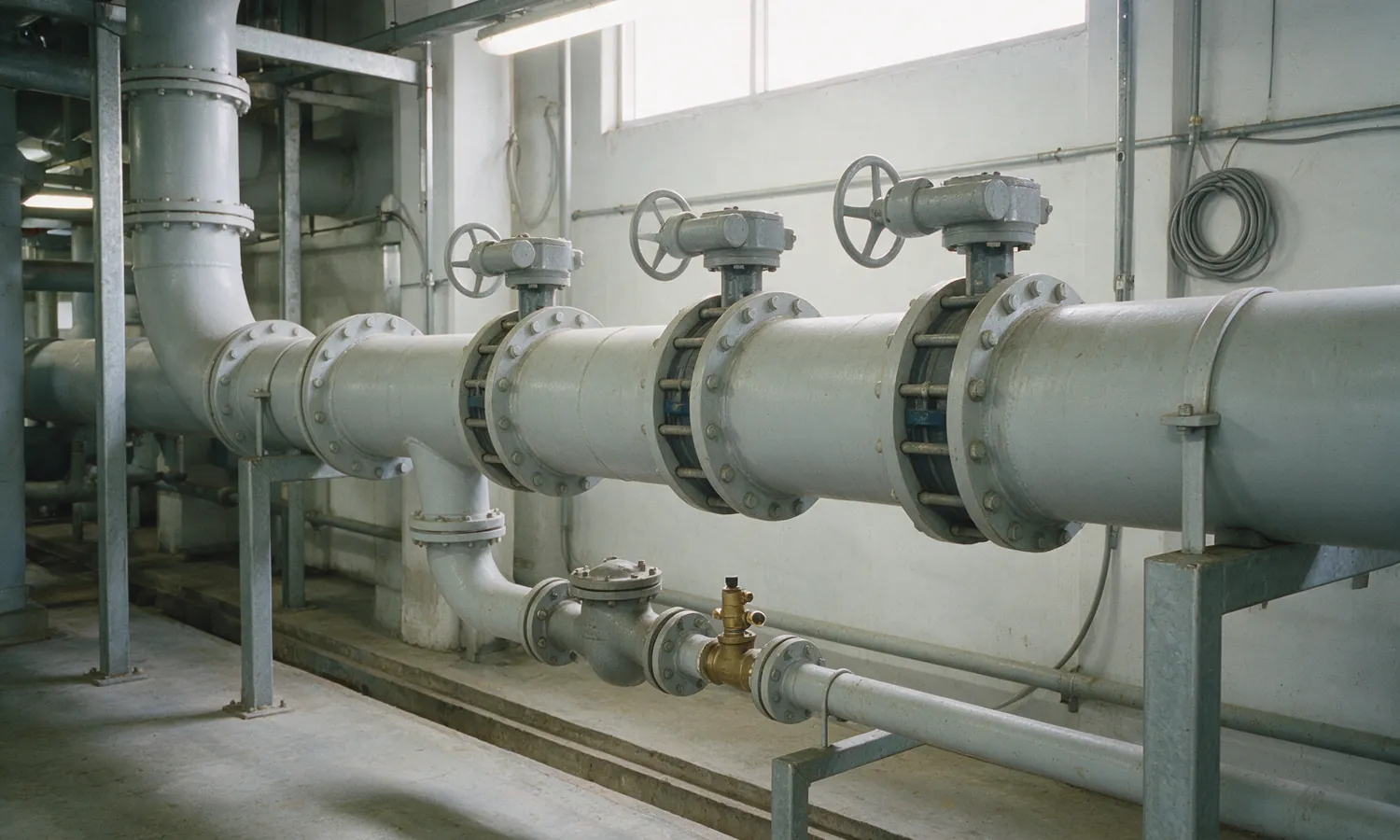
- A data centre chilled-water loop needs four different valve jobs in four different places: isolation at the plant, flow setting on the branches, dirt removal before the control valves, and pressure independent control at each cooling unit.
- Isolation and check duty at the chillers and pumps is a flanged, large-diameter job. Pettinaroli groups that range as butterfly and balancing valves, strainers and check valves, and names data centres among its applications.
- Flow setting on a branch is a static balancing valve with a memory stop and a measuring venturi. Pettinaroli's Terminator carries both.
- At the cooling unit the control valve is pressure independent, because the flow at one unit has to hold while the units around it modulate.
- BSRIA says mill scale, jointing compound and building debris will inevitably be found in new pipework and, left there in sufficient quantity, block strainers, control valves and small-bore heat exchangers. That is why the strainer and the flushing route come before the control valve, not after it.
On this page10 sections
01What does a data centre chilled-water loop have to do?
A data centre chilled-water loop moves heat from the cooling units in the hall to the chillers outside it, continuously, while the load under it changes hour by hour. Every valve on that loop exists to do one of four jobs: shut a section off, set how much water a circuit takes, keep dirt out of the parts that cannot tolerate it, or control the flow at a coil in real time.
The reason valve selection matters more here than in an office block is that a data hall has no tolerance for a warm aisle and no convenient time to drain a riser. A commercial building can lose a floor's cooling on a Sunday morning. A hall cannot, and the valve that lets one unit be isolated without emptying the branch is the difference between a maintenance visit and an outage. The general version of that argument is our pillar guide, choosing the right industrial valve, duty first and budget second.
The loop is also not one circuit. It is a plant section, a distribution section and a terminal section, and each one wants a different kind of valve.
02Which valves go at the chillers and the pumps?
At the plant end the loop needs isolation on every chiller and every pump, a check valve on each pump discharge, and a strainer protecting each pump suction. These are large-diameter flanged duties, selected for shut-off and pressure drop rather than for control. Nothing here modulates: a plant valve is either holding a machine in service or holding it out of service while somebody works on it.
Which isolating valve suits a chiller connection?
The isolation valve at this size is normally a butterfly valve, because at DN 200 and above a gate or ball valve is substantially heavier than a lug or wafer butterfly for the same shut-off duty, and takes far more room in a plant room. Which body style to specify is its own decision, and we have written it up separately in wafer, lug or double-flanged butterfly valve: how to choose. The short version for a plant room is that a lug body lets one chiller be unbolted while the rest of the loop stays full.
Which check valve suits a chilled-water pump discharge?
The check valve on a pump discharge stops the loop pushing backwards through a stopped pump. On a chilled-water header the quiet, spring-assisted axial type is usually preferred to a swing check, because a swing disc slamming shut on pump changeover is both a noise complaint and a pressure surge; we compare the two in swing vs silent (axial) check valves: where each one belongs. The plant by-pass arrangement itself, whether a decoupler on a primary and secondary scheme or a pressure by-pass on a variable primary one, is a system design decision rather than a valve selection one, and it is set before any of these valves are picked.
Pettinaroli groups exactly this part of the loop in its own catalogue. Its flanged HVAC range is split into butterfly and balancing valves, strainers and check valves, and actuators and accessories, described as being for medium and large HVAC installations with an extended size range for medium and large diameters. The applications it names are "Commercial complexes", "Healthcare facilities", "Data centers" and "Industrial plants". Optimus Distributor supplies that range in Malaysia; the overview sits on our Pettinaroli HVAC and data centre page.
03Which valves go on the risers and the branches?
On the distribution side the loop needs an isolating valve at the foot of every riser and at every branch take-off, plus a means of setting how much water each branch is allowed to take. Isolation and flow setting are two separate jobs, and using one valve for both is the mistake that makes a hall impossible to rebalance. A throttled isolating valve has no memory: the next person to close it for maintenance destroys the setting.
The flow-setting device is a static balancing valve. Pettinaroli catalogues its Terminator manual balancing valve with a memory stop device and an interchangeable venturi for flow rate measuring, and lists a Terminator G static balancing valve with a fixed orifice in cast iron with ANSI flanges, described as ideal for use in circuits of heating and cooling systems. The memory stop is the part that matters operationally: the valve can be closed fully for maintenance and reopened to the setting it was commissioned at. Its venturi is an interchangeable part, so a circuit whose design flow changes later can be re-ranged rather than replaced.
Does the riser need a differential pressure control valve?
A differential pressure control valve holds the pressure across a branch or a riser steady as the circuits on it open and close, which is what stops a two-port terminal valve being pushed open by its neighbours. Whether the loop needs one depends on what sits at the end of the branch. A branch whose terminals each carry a pressure independent control valve is already protected at the terminal, and the branch device is then there for isolation and measurement. A branch feeding fixed-orifice terminals is the case where differential pressure control earns its place.
Either way the circuit has to be commissioned, and CIBSE is blunt about why. CIBSE's own record of Commissioning Code W states: "The effective operation of any water system is dependent on satisfactory circuit balancing and commissioning." That code is worth naming carefully, because the edition most specifications still quote is gone. CIBSE's own record for Commissioning Code W: Water distribution systems (2010) shows its status as Superseded and states that the publication was withdrawn in June 2025 and should not be used on current projects. If a tender document in front of you names the 2010 code, raise it before the valves are ordered rather than after.
04Which valve goes at the cooling unit?
At each cooling unit the loop needs a pressure independent control valve with a modulating actuator, an isolating valve on each leg, a strainer, and a route for flushing that does not run through the control valve. The control valve at a terminal is pressure independent because the differential pressure across it will not stay still. When the unit beside it modulates, the pressure this one sees moves, and a conventional two-port valve passes whatever that pressure gives it.
Pettinaroli describes a pressure independent control valve on its PICV range page as "designed to maintain a constant and accurate flow rate regardless of pressure variations within the system". That one sentence is the whole argument for using them in a data hall: the design flow at a cooling coil is a commitment, not a starting point, and a valve that holds it is holding the aisle temperature with it. Pettinaroli's own printed HVAC catalogue puts the span of its PICV range at 150 litres an hour up to 500,000 litres an hour, which is the reason one family can cover both a single coil and a whole air handling unit.
These parts are normally bought as one pre-assembled kit rather than as loose fittings, and that is a selection decision in itself: the kit fixes which jobs are done at the terminal before anything reaches site. We have covered what goes inside one in valve kits for data centre CRAH units: what goes in one and why, and the off-site assembly question in prefabricated valve kits for fan coils, chilled beams and AHUs.
| Where on the loop | Valve duty | Typical device | What it is selected for |
|---|---|---|---|
| Chiller and pump connections | Isolation | Flanged lug or wafer butterfly valve | Full shut-off at large diameter, and the ability to unbolt one machine |
| Pump discharge | Non-return | Axial or dual-plate check valve | Closing before reverse flow builds, without slam |
| Pump suction | Debris removal | Flanged strainer | Screen area and a cleanable element |
| Riser foot and branch take-off | Isolation | Butterfly or ball valve | Shutting a branch without draining the riser |
| Riser or branch, variable volume | Differential pressure control | Differential pressure control valve | Holding the pressure across the circuit as terminals open and close |
| Branch | Flow setting and measurement | Static balancing valve with memory stop and venturi | A setting that survives being closed and reopened |
| Terminal unit | Flow control | Pressure independent control valve with modulating actuator | Holding design flow while neighbouring units modulate |
| Terminal unit | Isolation, straining, flushing | Pre-assembled hydronic kit | One tested assembly instead of several site joints |
05Why does dirt removal come before the control valves?
Dirt removal comes first because a control valve is the component in the loop least able to survive it. BSRIA states that contaminants such as mill scale, jointing compound and building debris will inevitably be found in newly fabricated heating and cooling pipework, and that if they are allowed to remain in sufficient quantity they make the system prone to blockages at strainers, control valves and small-bore heat exchangers. The control valve is named in that sentence for a reason.
BSRIA defines pre-commission cleaning as the process of bringing a closed heating or cooling system to a satisfactory state for commissioning and ongoing maintenance of water quality, in its guide BG 29. BG 29/2020 is the sixth edition, replacing BG 29/2012, and in March 2021 BSRIA published an amended version as BG29/2021. Naming the edition on a specification is worth doing, because the cleaning regime a contractor prices is the one named.
The practical consequence for valve selection is the flushing by-pass. A kit with a flushing route lets the installer push cleaning water through the branch at full velocity without sending it through the control valve seat, and that is a selection decision, not a commissioning one: a kit without that route cannot be flushed that way later. Which strainer type protects the plant is a separate question, covered in Y-strainer vs basket strainer.
Where the water is known to be dirty and will stay dirty, the control valve itself can be chosen for it. Pettinaroli states that its Dynasty 92 Series is engineered to operate reliably even in systems with heavily contaminated water, that its internal components can be removed, cleaned and replaced, and lists a dirt-resistant diaphragm, a linear flow characteristic and a low start-up differential pressure among its features. That is the valve for a retrofit into an existing loop whose history nobody can vouch for.
06Where do the measuring points go?
Measuring points belong wherever somebody will later have to prove a flow: at each branch, and at each terminal unit. A loop with no measuring points cannot be commissioned, rebalanced or defended, and adding them after the insulation is on costs far more than specifying them does. The venturi in a balancing valve and the pressure and temperature test points on a terminal kit are the two that get forgotten.
One ordering detail belongs with them, because it is bought at the same time and missed just as often. Pettinaroli's HVAC accessories catalogue lists the cooling insulating case and the heating insulating case as separate items for the same valve series, with separate codes. On chilled water the one to order is the cooling case.
07Which pressure independent control valve does the loop need?
The choice between Pettinaroli's two PICV families comes down to the control characteristic and the water. Pettinaroli states that the EvoPICV combines constant flow limitation with full-stroke, full-authority equal percentage temperature control in one valve, and that it is suitable for water-to-air terminal units such as fan coil units, chilled beams and air handling units. A chilled-water cooling coil is a water-to-air terminal unit, which puts the equal percentage valve in its intended place.
The Dynasty is the dirty-water answer rather than the default one, and Pettinaroli lists it with a linear flow characteristic rather than an equal percentage one. Choosing between them is therefore a choice about which risk the loop actually has: coil control authority, or water quality. The underlying principle, and why an equal percentage curve suits a coil at all, is explained in PICV explained and in hydronic balancing and PICV for commercial buildings. Whether the valve should be a mechanical or an electronic one is a separate decision we have set out in mechanical PICV vs electronic PICV, and the full Pettinaroli hydronic range is on our Pettinaroli hydronic balancing and PICV page.
08What does an enquiry have to state?
An enquiry that can actually be priced states the loop before it states the valves. Send the design flow and the available differential pressure for each circuit, the connection sizes, whether the system is variable or constant volume, and what is known about the water. A list of valve sizes alone cannot be selected against, because two loops with identical pipe sizes can need different valves.
Send us that and our engineers in Subang Jaya will read the schedule, say which valve each duty needs and why, and tell you where the schedule is asking for something the loop will not support. A lead time or a stock position follows the schedule rather than the drawing, so those come after the selection, not before it.
09Questions engineers ask about chilled-water loop valves
Can one valve do both isolation and balancing on a branch?
It can be piped that way, and it is a common shortcut, but it gives up the setting. A throttled isolating valve has no memory of where it was set, so the first person to close it for maintenance destroys the commissioned flow. Pettinaroli catalogues its Terminator manual balancing valve with a memory stop device, which is what keeps the setting.
Does a loop with PICVs at every terminal still need balancing valves on the branches?
It needs far less throttling, because a pressure independent control valve limits the flow at the terminal itself. Pettinaroli describes a PICV as designed to maintain a constant and accurate flow rate regardless of pressure variations within the system. The branch device is then there for isolation and measurement rather than for setting a flow. A branch feeding fixed-orifice terminals still has to be balanced.
Why does the strainer go in front of the control valve rather than at the plant only?
Because the control valve is the component least able to survive debris, and a plant strainer does not protect against dirt generated downstream of it. BSRIA names control valves among the components that block when the debris left in new pipework is allowed to remain in sufficient quantity. A terminal strainer is the last line in front of the valve seat, and it is cleaned far more often than anyone expects.
What is a flushing by-pass for, and can it be added later?
A flushing by-pass lets cleaning water be pushed through the branch at full velocity without running it through the control valve seat. It is a selection decision rather than a commissioning one: a kit without that route cannot be flushed that way afterwards without breaking into the pipework. Pettinaroli builds its PCS hydronic kits around a flushing by-pass, so the route is designed in.
Which Pettinaroli PICV suits a chilled-water cooling coil?
Pettinaroli states that the EvoPICV has an intrinsic equal percentage characteristic and is suitable for water-to-air terminal units such as fan coil units, chilled beams and air handling units. A chilled-water cooling coil is a water-to-air terminal unit. Where the water is heavily contaminated, Pettinaroli describes the Dynasty 92 Series instead, with serviceable internals and a dirt-resistant diaphragm.
10Sources
Read 17 October 2026. Product descriptions and range groupings come from Fratelli Pettinaroli's own public catalogue pages, and from its HVAC catalogue, which Optimus Distributor holds as the manufacturer's own document. They are catalogue data, not a selection: confirm every figure against the current datasheet for the model you are buying, and your purchase order governs. This page names BSRIA BG 29 and CIBSE Commissioning Code W and summarises what their publishers say about them; it does not reproduce either of them. Read the current editions from BSRIA and CIBSE for the requirements themselves.
- Fratelli Pettinaroli, Flanged HVAC Solutions (the flanged range groupings, the size statement and the applications named)
- Fratelli Pettinaroli, Static Balancing Valves (the Terminator memory stop and interchangeable venturi, and the Terminator G description)
- Fratelli Pettinaroli, PICV Range (the PICV operating principle, and the EvoPICV and Dynasty descriptions and features)
- Fratelli Pettinaroli, HVAC Accessories (the separate cooling and heating insulating cases)
- Fratelli Pettinaroli, HVAC catalogue index (the category names used on this page)
- Fratelli Pettinaroli, Hydronic kits PCS (the kit contents and how the kits are identified)
- Fratelli Pettinaroli, HVAC Water distribution 2024 catalogue, printed page 45 (the manufacturer's own document, held by Optimus Distributor; the stated span of the PICV range)
- BSRIA, BSRIA publishes new edition of BG29 (BSRIA's own announcement, republished on Designing Buildings, for pre-commission cleaning, the named contaminants and the edition history)
- CIBSE, Commissioning Code W: Water distribution systems (2010) (CIBSE's own record, for the balancing statement, the Superseded status and the June 2025 withdrawal)